
🤖Chinese Star Robot Maker Unitree Doesn’t Look Like a High-Tech Company
How a 480-person company becomes the world's largest maker of humanoid robots.


Hangzhou-based Unitree Robotics just filed for an IPO on Shanghai's STAR Board, aiming to raise ¥4.2 billion ($630 million).
The proceeds will be used for advancing research into AI models, developing the robot body hardware itself, building out new product lines, and expanding manufacturing capacity. Unitree aims to reach an annual production capacity of 190,000 robots.
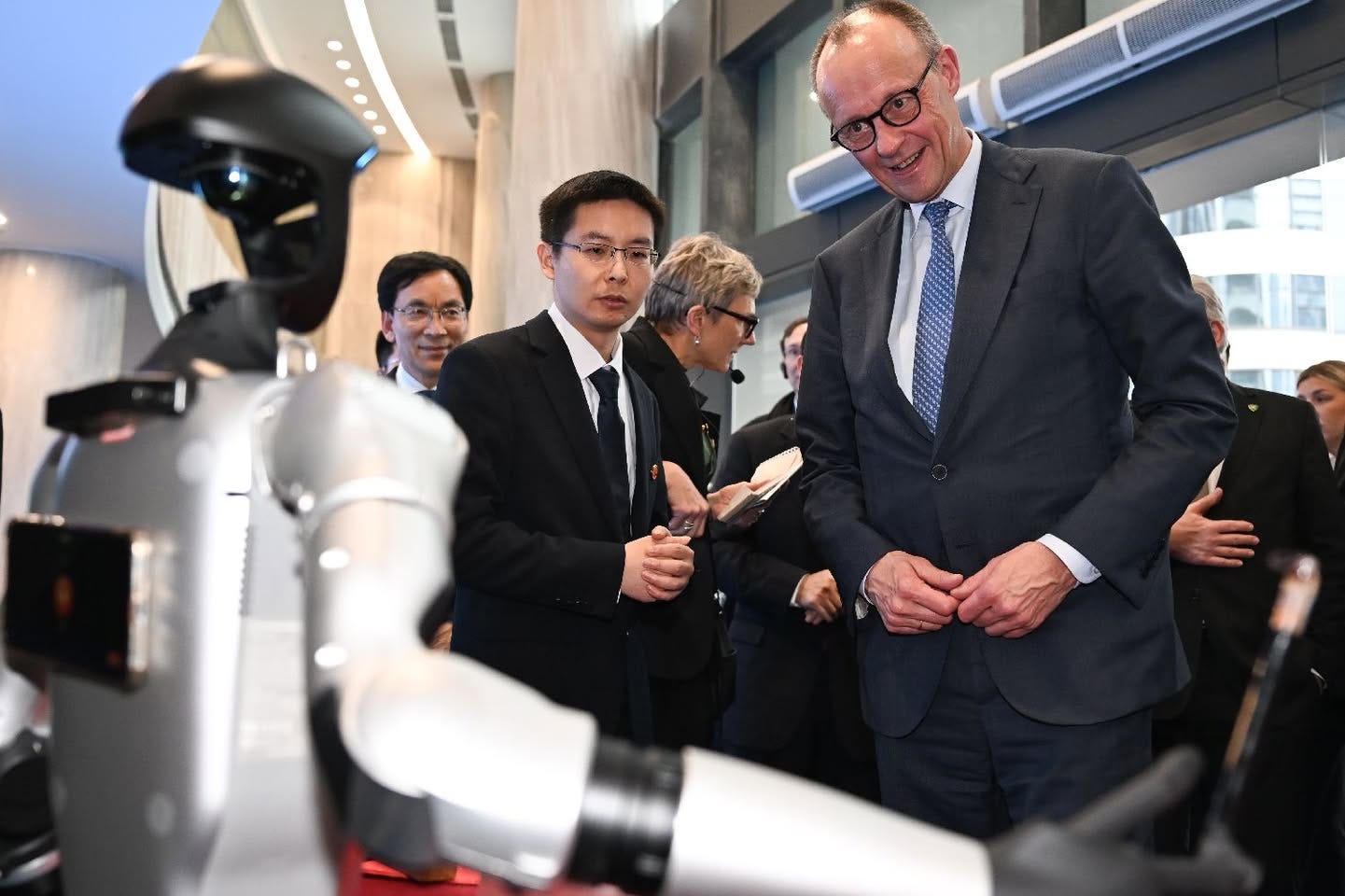
Founded in 2016 with just ¥100,000 ($13,800) in registered capital, Unitree is China’s shiniest robotics company at the moment. Its humanoid robots danced and performed backflips during the Spring Festival Gala, the most-watched television broadcast on earth. Founder and CEO Wang Xingxing recently welcomed German Chancellor Friedrich Merz, and sat alongside some of China’s most prominent business leaders during a meeting hosted by President Xi Jinping.
Now the prospectus is out. And the numbers look surprisingly good.
The un-techy financials
A typical high-tech company heading toward IPO is money-losing, carries a high R&D cost ratio, and runs on investor patience. Unitree doesn’t fit that profile.
In 2025, the company generated ¥1.71 billion ($257 million) in revenue, up 335% year-over-year. Adjusted net income reached ¥600 million ($90 million), up 674%. Operating cash flow tripled to ¥672 million ($101 million).
The gross margin sat at 60.27% for 2025. In comparison, Apple’s latest twelve-month gross margin is 47.3%, while Louis Vuitton runs around 65-70%. One of the reasons is full-stack vertical integration: Unitree designs its own core components like motors, decelerators, robohands, and lidars rather than buying them off the shelf. They have also developed distinctive motion control algorithms that deliver high performance without requiring the most expensive compute.
That said, these numbers will almost certainly come under pressure as competition between humanoid robot companies intensifies and pricing wars could force the whole industry toward thinner margins.
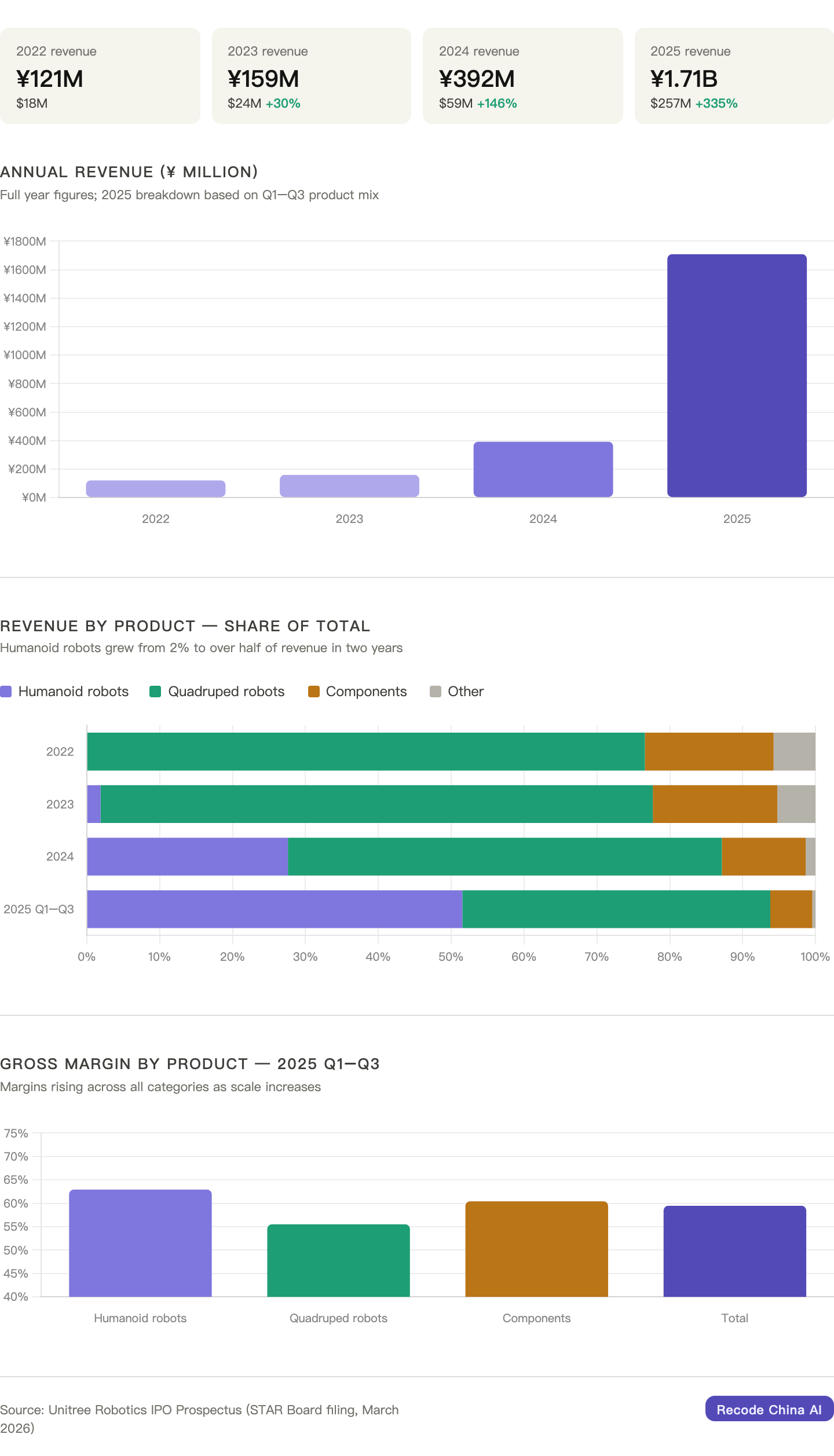
R&D as a share of revenue fell from 31.4% in 2023 to 17.8% in 2024 to 7.7% in 2025. While that trend line looks alarming, in context, absolute R&D spending kept growing from ¥30 million ($4.5 million) to ¥70 million ($10.5 million) to roughly ¥90 million ($13.5 million) annualized.
With 480 employees at year end, Unitree generated roughly ¥3.56 million ($534,000) in revenue per employee. Most robotics firms at a comparable stage would have ten times the headcount.
One noteworthy detail in the prospectus is Unitree spent just ¥22.57 million ($3.4 million) on advertising in the first nine months of 2025. For a company at this level of global visibility, that number is almost nothing. When your robots are dancing on China’s biggest stage, you don’t need to run many ads.
The humanoid robot gap
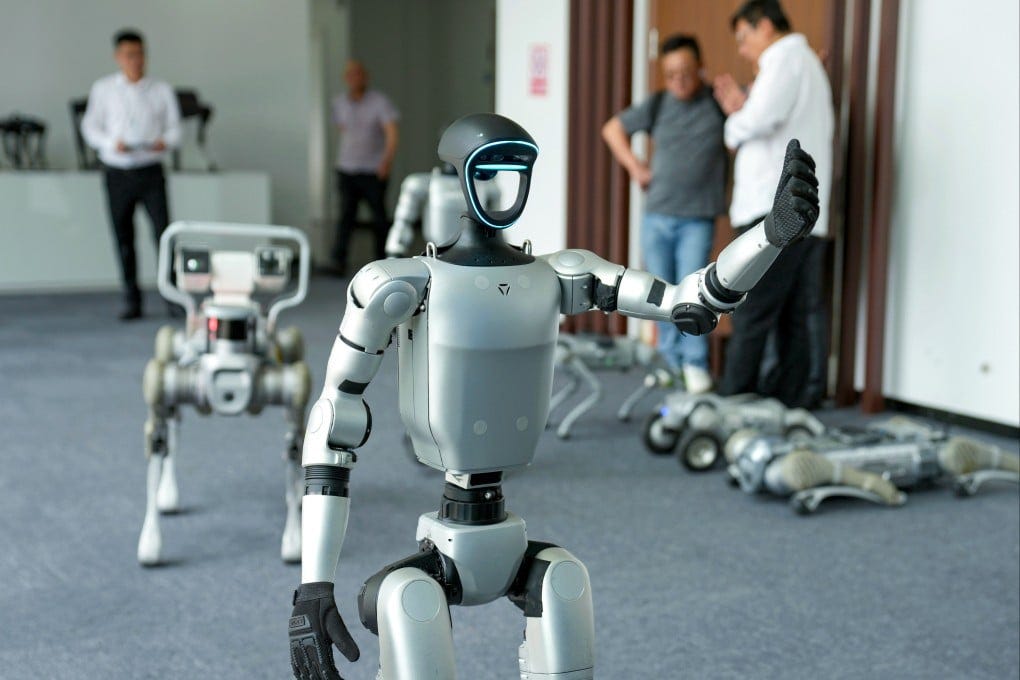
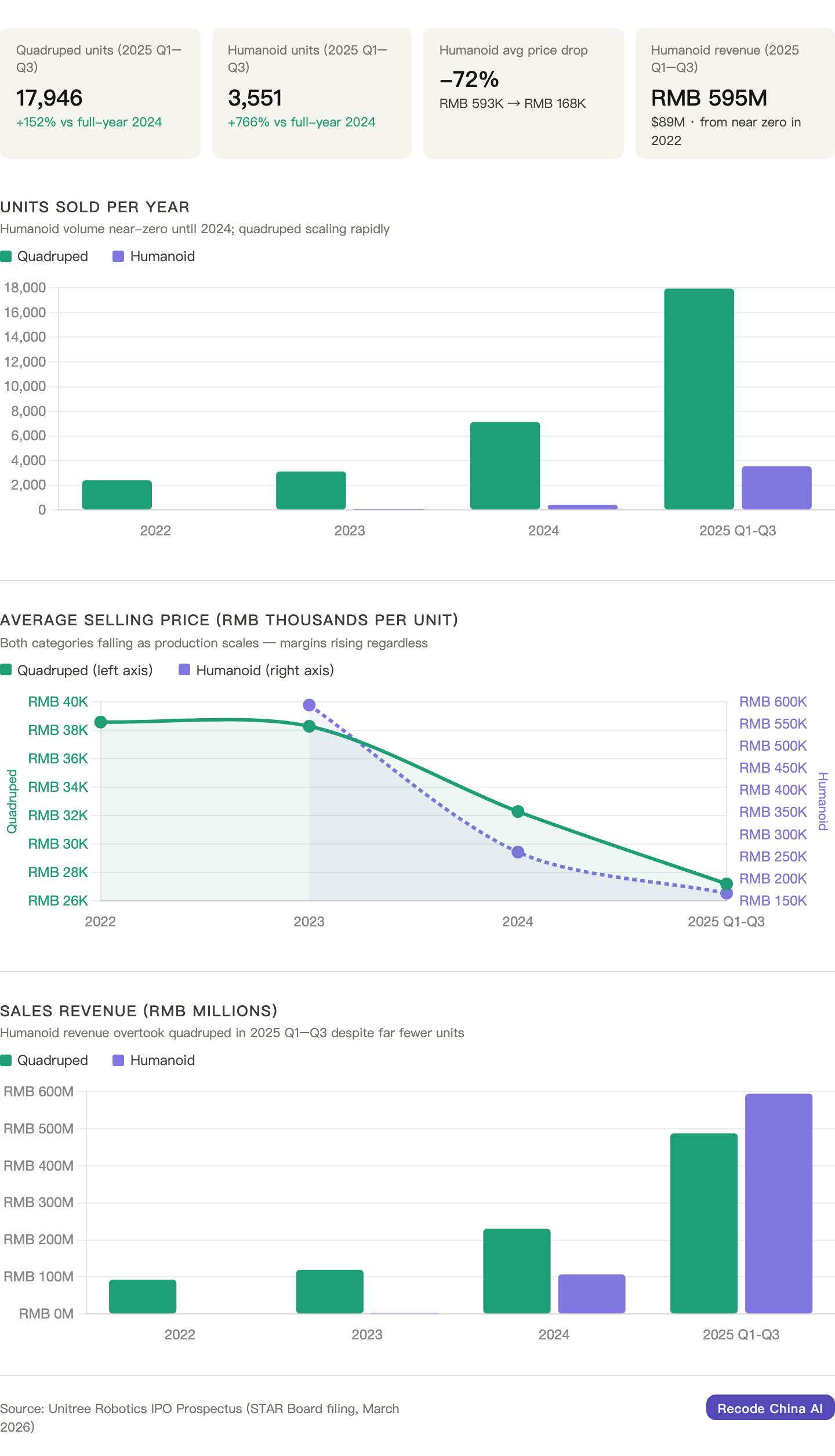
In 2025, Unitree shipped more than 5,500 pure humanoid units, claiming the top spot globally. For comparison, the prospectus states that Figure AI and Agility Robotics each shipped approximately 150 units that year. Tesla has not publicly sold Optimus; it remains in internal testing. Unitree’s volume advantage over its closest Western competitors is roughly 37:1.
The production-to-sales ratio for humanoid robots was 95.95% in 2025, suggesting demand is absorbing supply almost entirely.
Pricing has moved aggressively downward. The average selling price of a Unitree humanoid was ¥593,400 ($89,010) in 2023, when only five units were sold. By 2024 it had dropped to ¥260,700 ($39,105). By the first three quarters of 2025, it had fallen further to ¥167,600 ($25,140). A 72% price decline in two years, with gross margins that simultaneously expanded. The G1 base model now starts at ¥85,000 ($12,750); the smaller R1 Air starts at ¥29,900 ($4,485).
But the price requires a closer look. The G1 standard edition comes with no developer access—no SDK, no open interface. It cannot be reprogrammed. For universities, research labs, and developers who need to actually build on top of the platform, the relevant product is the G1 EDU edition, which runs ¥200,000 to ¥400,000 ($30,000 to $60,000).
Keep reading with a 7-day free trial
Subscribe to Recode China AI to keep reading this post and get 7 days of free access to the full post archives.